

Autumn – Gobi Camel Expeditions
$4,180
Camel trekking adventure in the Gobi in late autumn – slow travel in the desert. Vast expanses and silence. Camping under starlit night skies…in cozy heated tents. An unforgettable journey
An 11-day Journey into the early winter Gobi
Prepare in Ulaanbaatar. Travel south to the desert. Spend four days traveling by camel. Return with a piece of Mongolia in your soul.
November 15-25, 2026
November 20-30, 2026
USD $4,180
Autumn Gobi Camel Expedition
First we prepare for the desert. Before heading south, we take the time to prepare properly for the Gobi late autumn experience. We’ll visit one of Ulaanbataar’s outdoor markets to find suitable Mongolian-made winter boots and other locally produced clothing. You’ll also receive a custom made warm Mongolian deel for the expedition.
These aren’t props for a photograph. You’ll actually wear them in the Gobi
Travel to the Staging Area of the Autumn Gobi Camel Trek
 Embark on an unforgettable desert journey in late autumn when the Gobi transitions to winter. This adventure takes you through the vast expanses of the Mongolian Gobi. Traveling to the start of the autumn Gobi camel trek is by 4×4. The journey starts in Ulaanbaatar city, crossing the steppes of Mongolia to reach the modern capital of Mongolia’s South Gobi province, the city of Dalanzadgad. This is a full day’s drive with a nice lunch break in Middle Gobi province and several shorter stops along the way. From Dalanzadgad, the journey continues the next day to reach Zuramtai Mountan, and in its interior the ‘Stone Camels Camp”. This is the staging area for the autumn Gobi camel trek.
The “Stone Camels Camp” – Our Base Camp
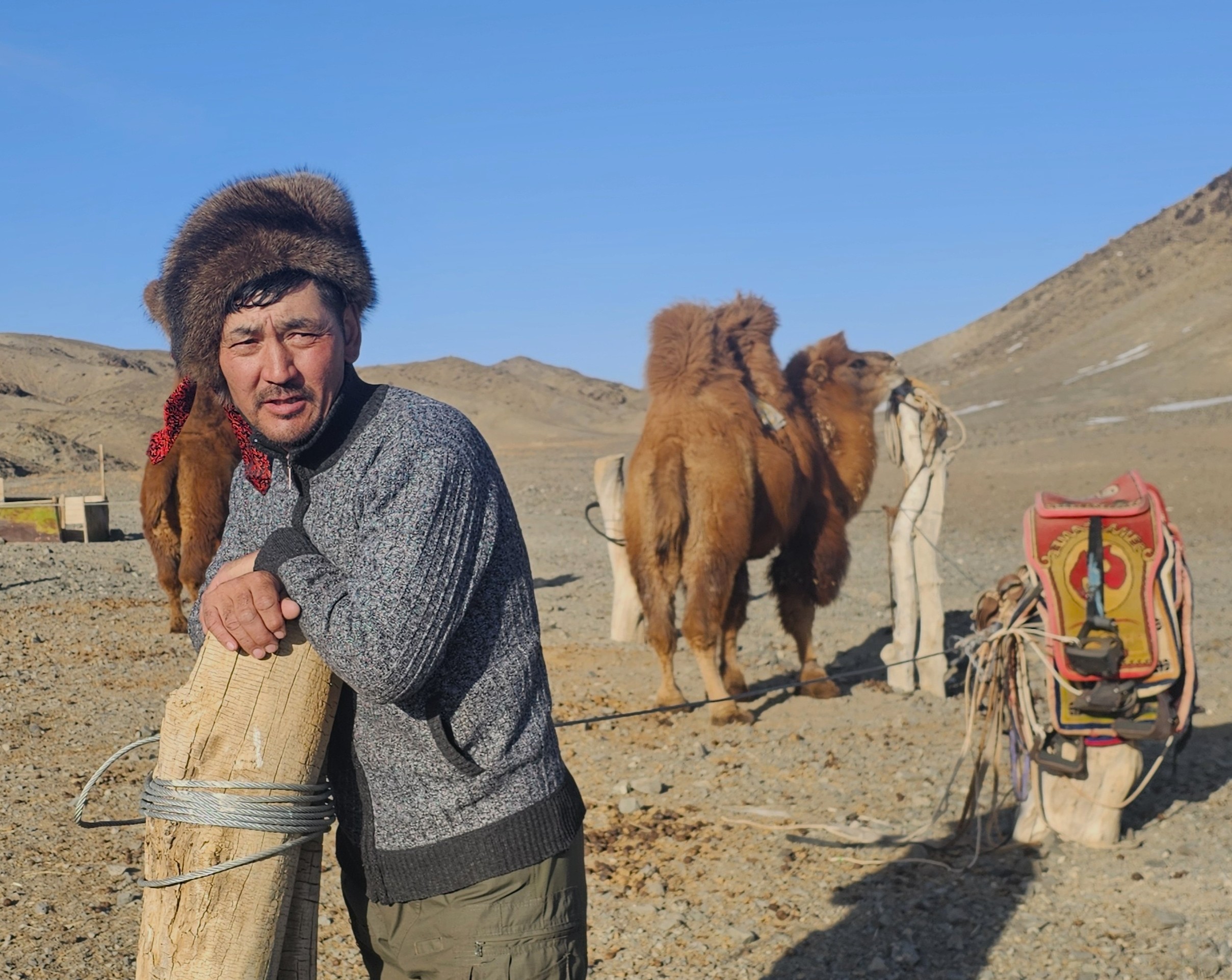
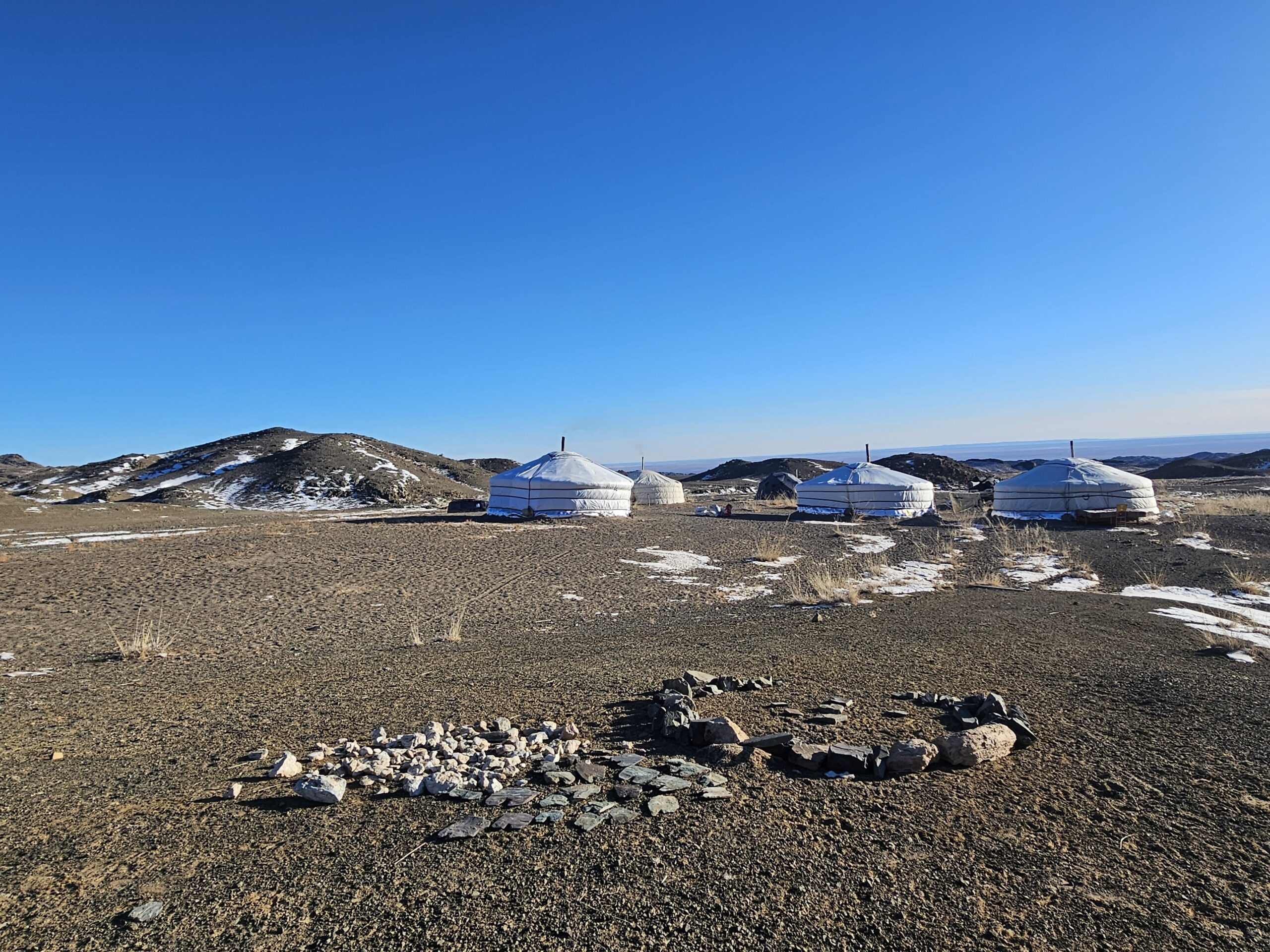
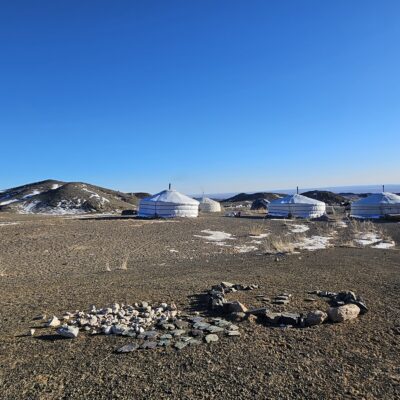
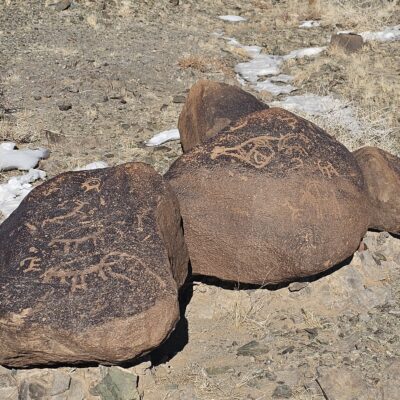
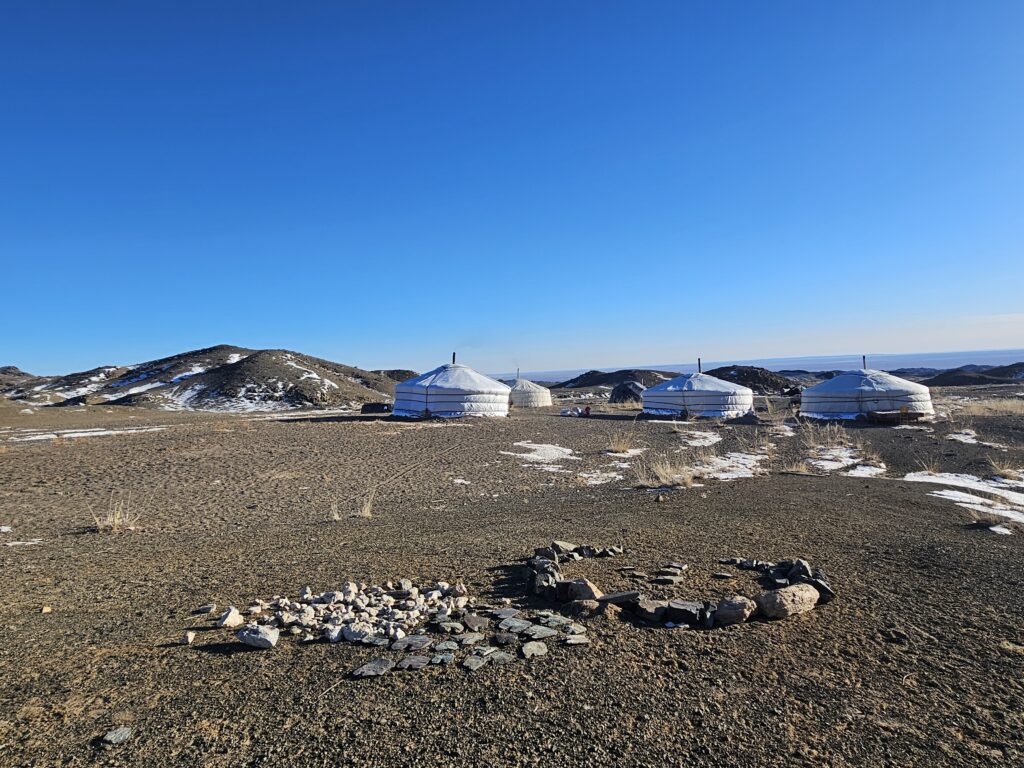 The autumn Gobi camel trek leaves from and returns to the Stone Camel Camp. A simple, beautiful ger camp in the vicinity of a local camel herder family’s winter camp site. Preserved near the Stone Camel Camp are the toys of nomadic herders’ children that gave the camp its name and meaning. Stones carved as camels along with other stones symbolizing other kind of livestock, as well as stone corrals and the outline of a ger all depict a nomad family’s camp and livelihood, created by children. Children would play with these stone toys while camped at the site, but the toys were always left behind when the family moves on. It was a purposeful teaching of patience in making the toys, dealing with loss and rediscovery and of being free from material greed.
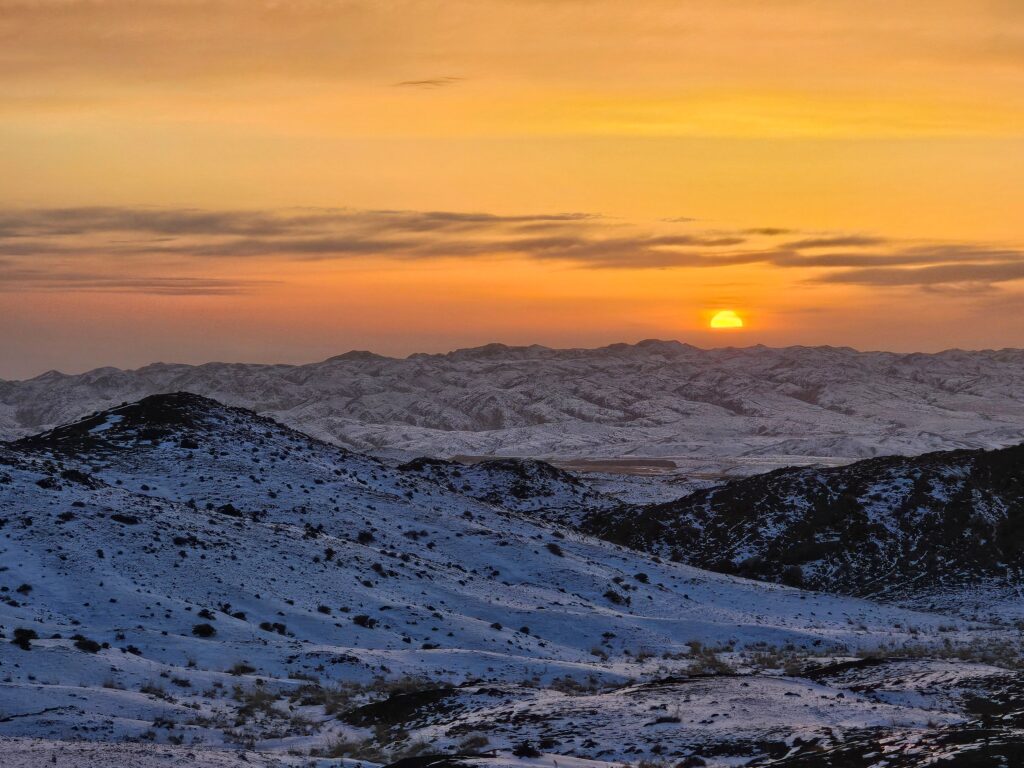
The Stone Camels Camp is set above a river bed and surrounded by small peaks from where one can enjoy a great view onto the desert landscape and spectacular sunsets.
Autumn Gobi Camel Trek – Four Days on Camel Back
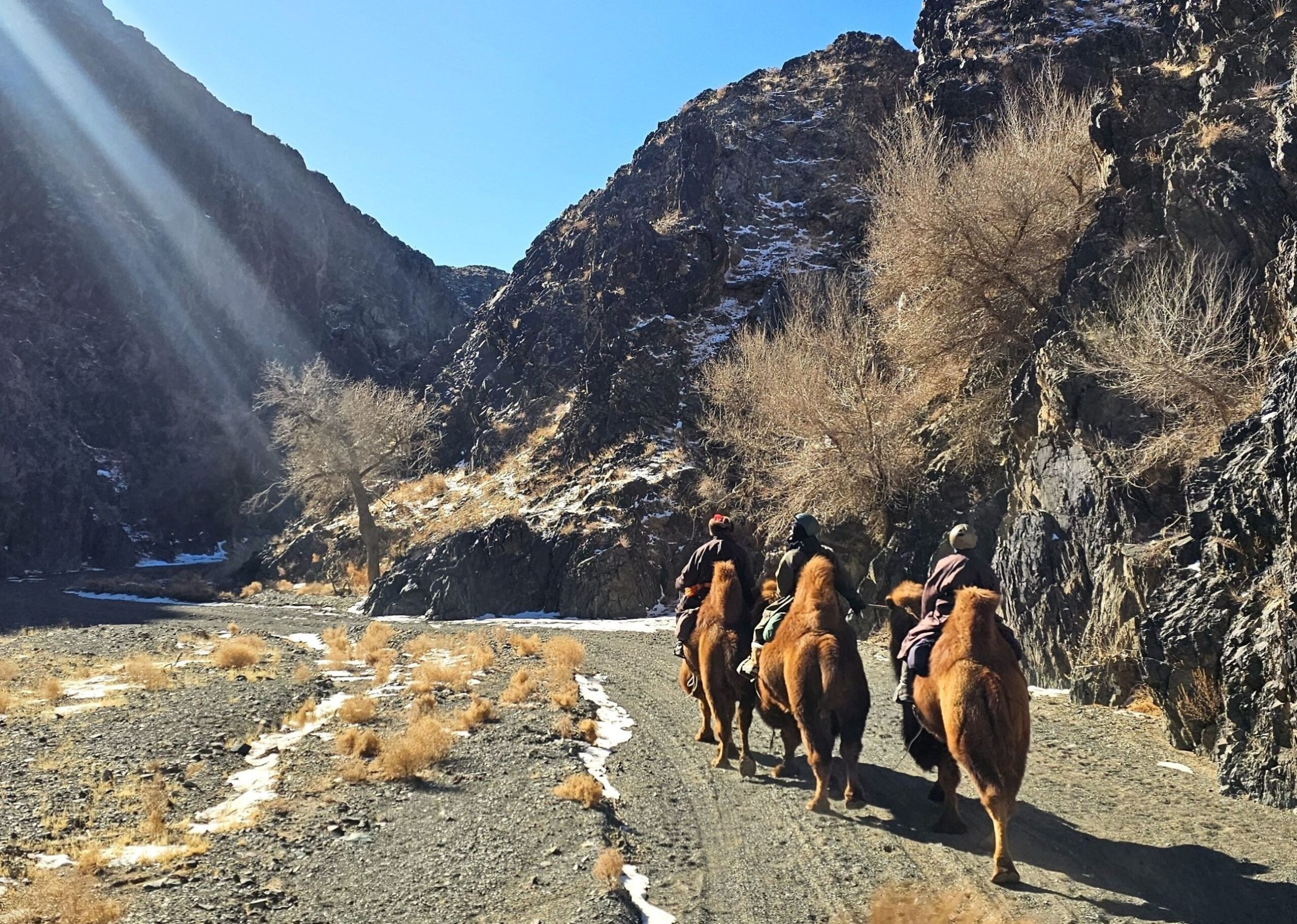
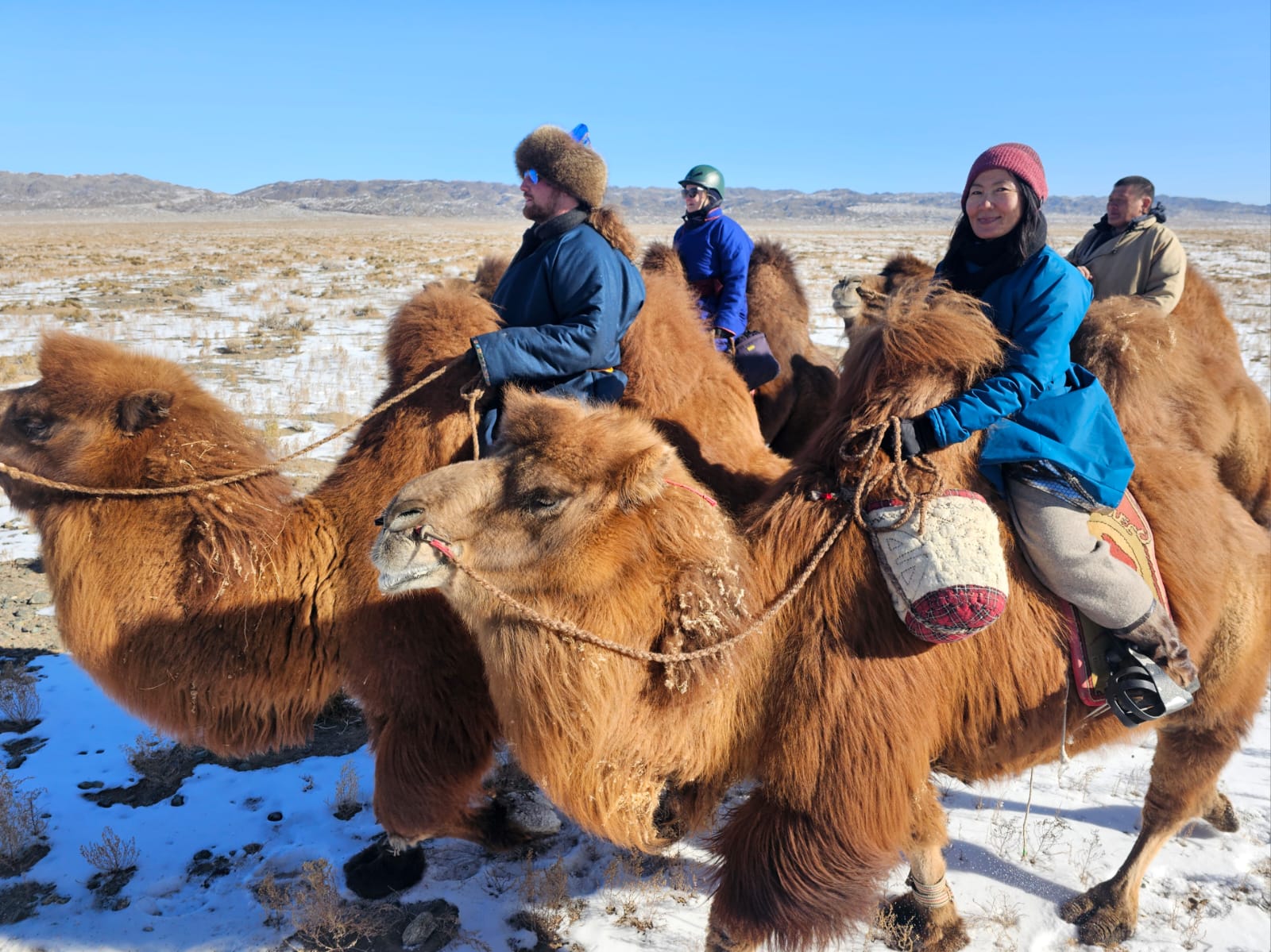
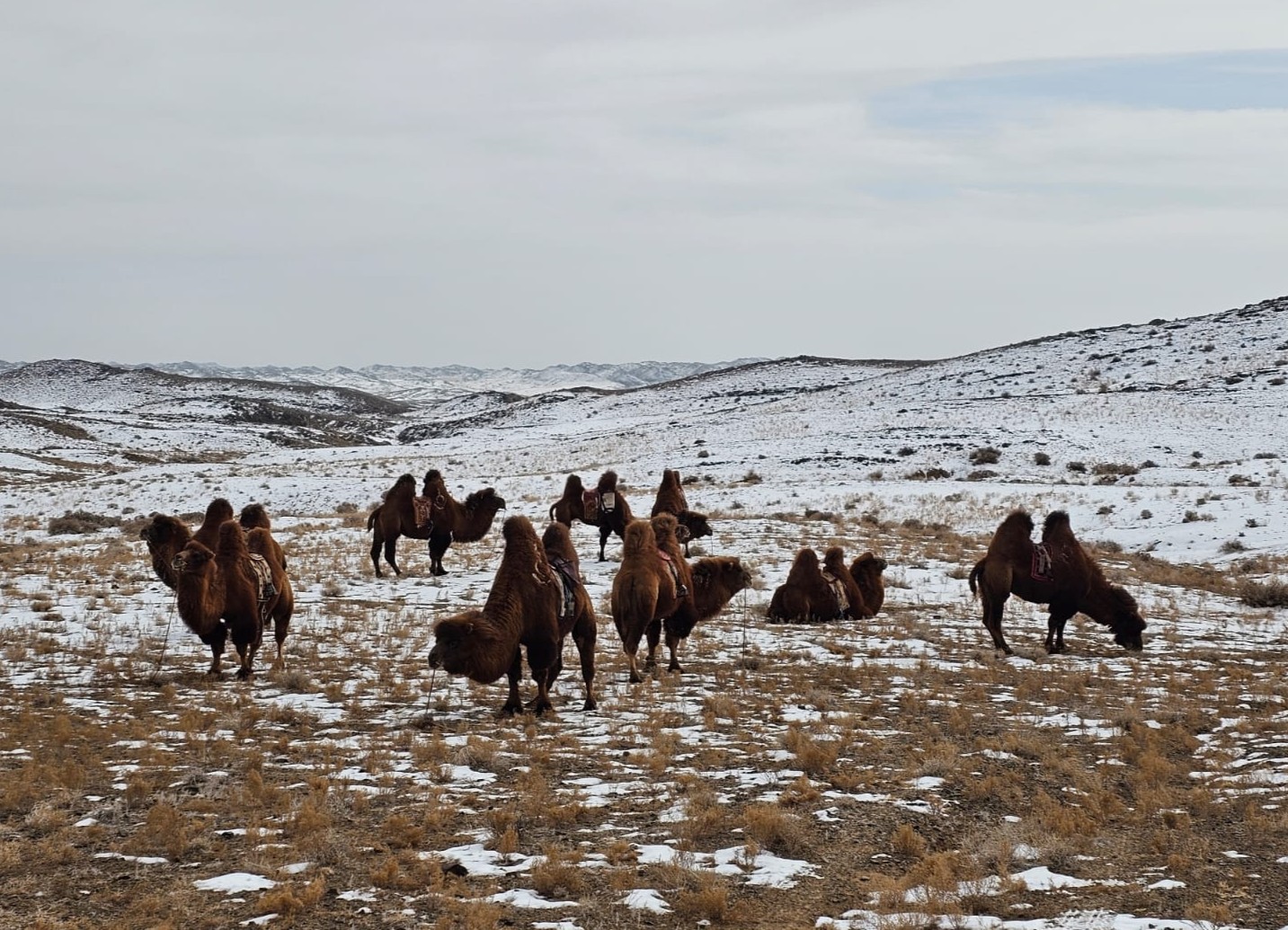
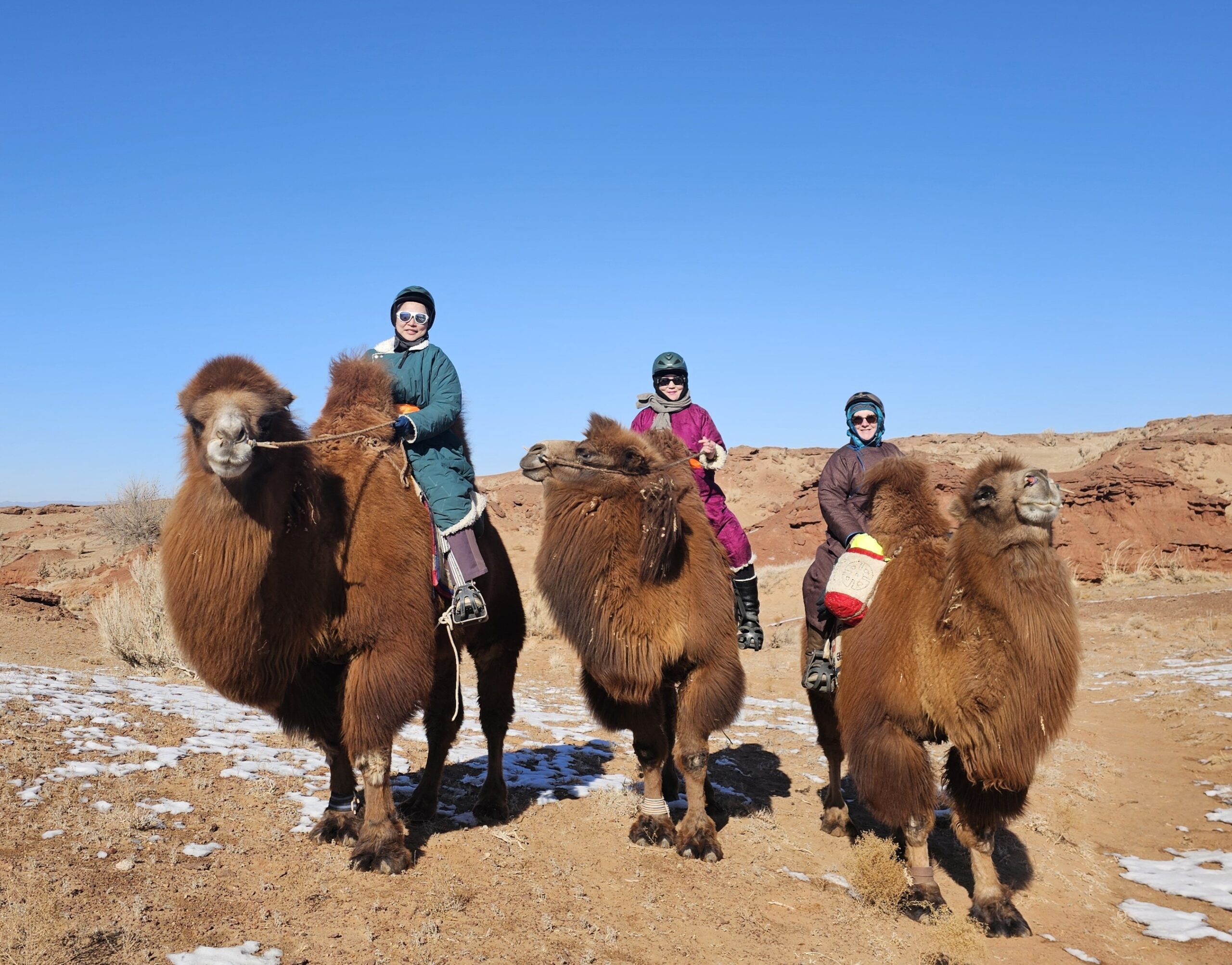
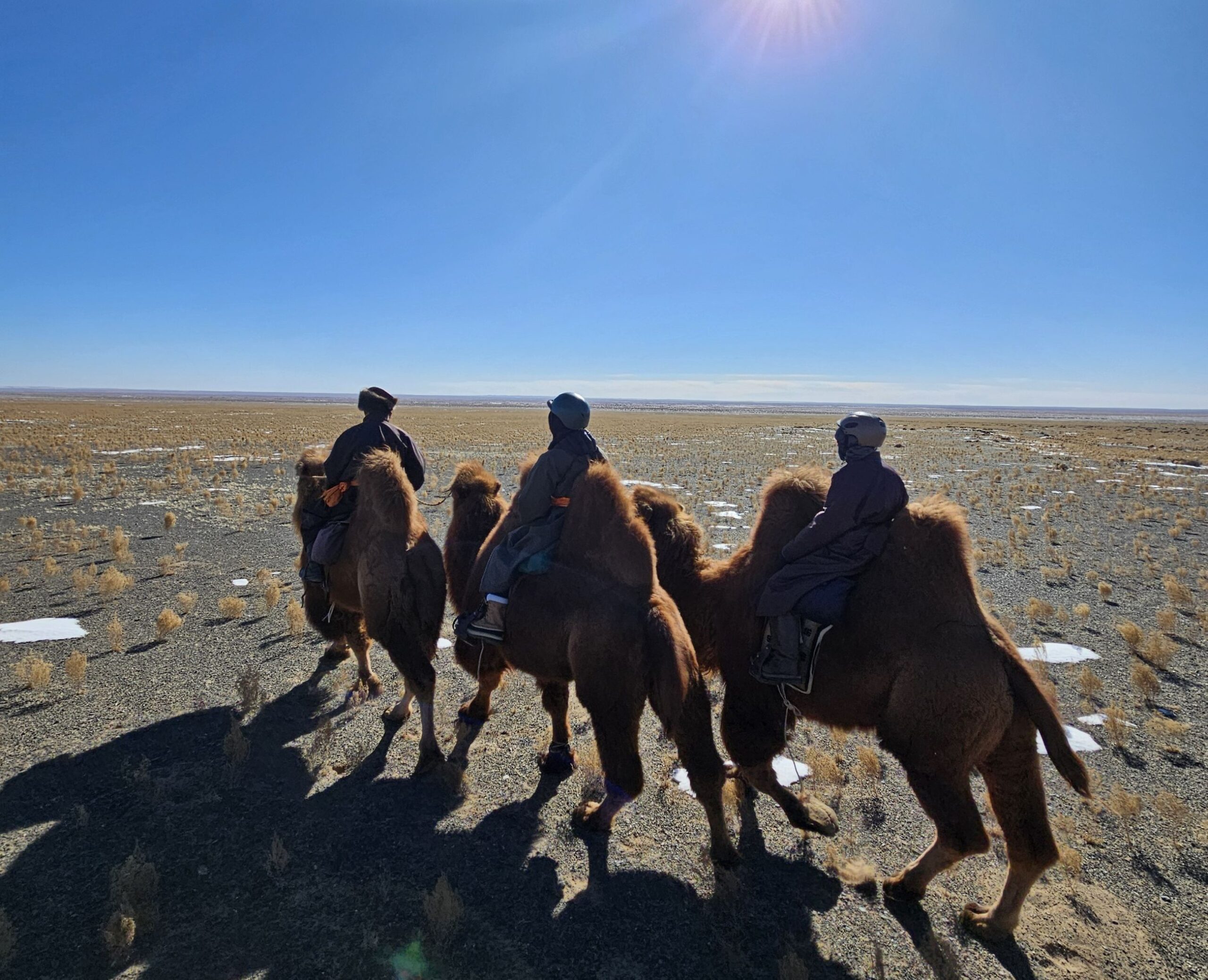
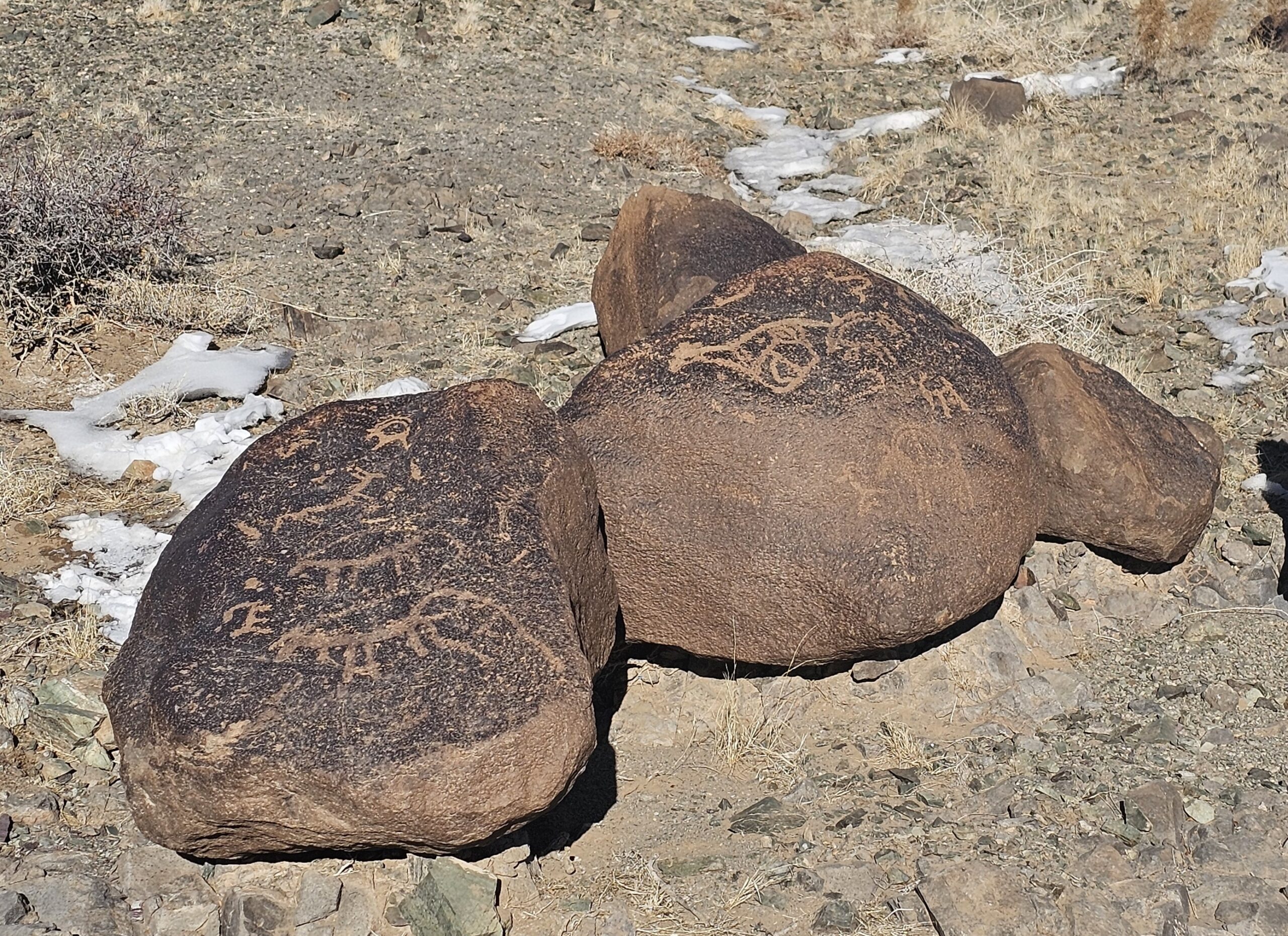
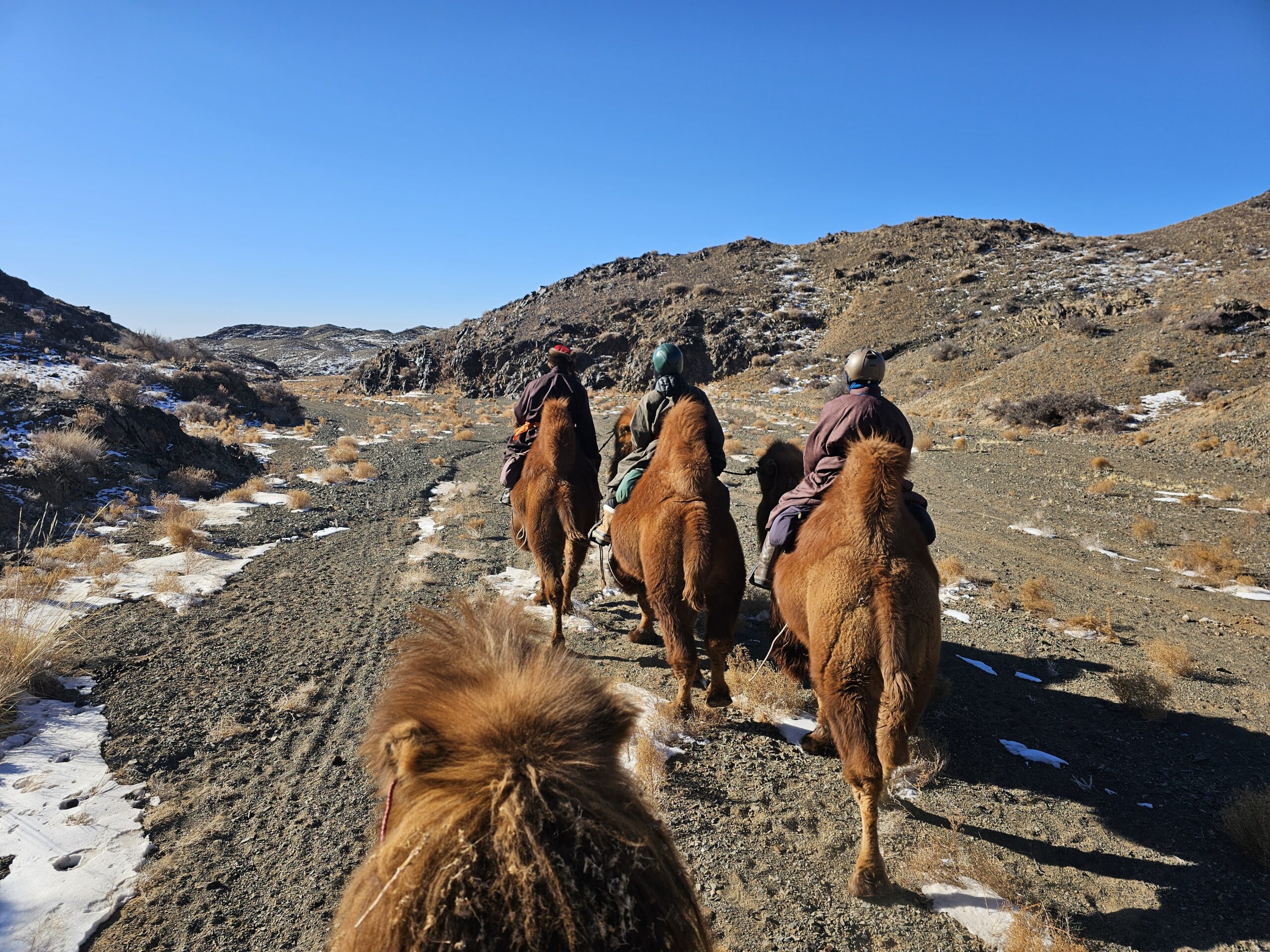
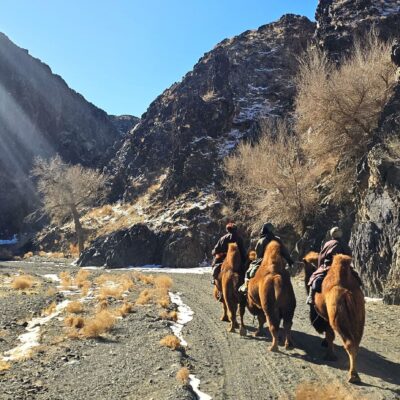
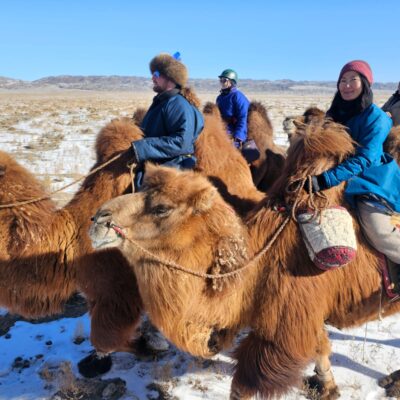
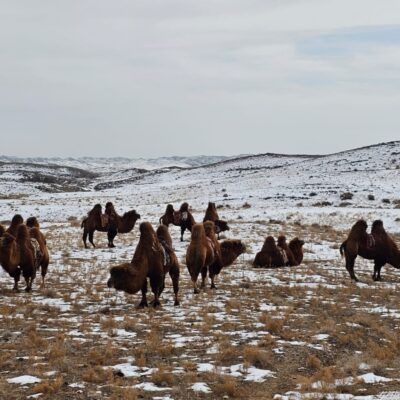
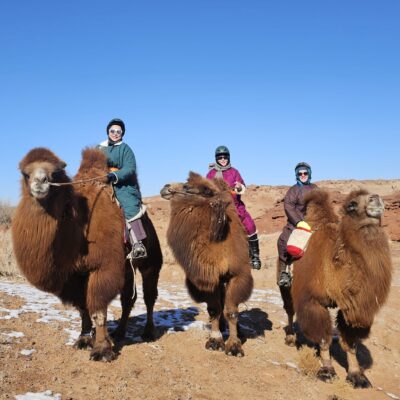
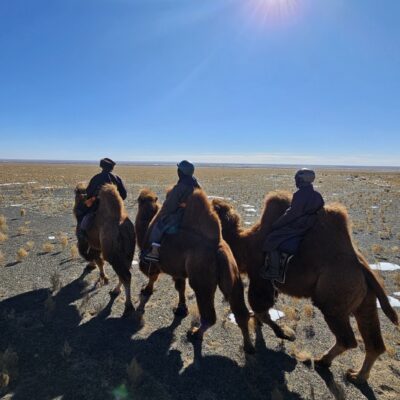
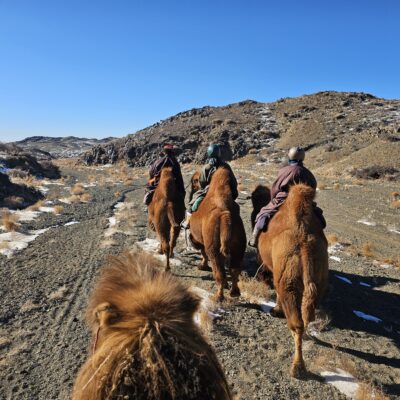
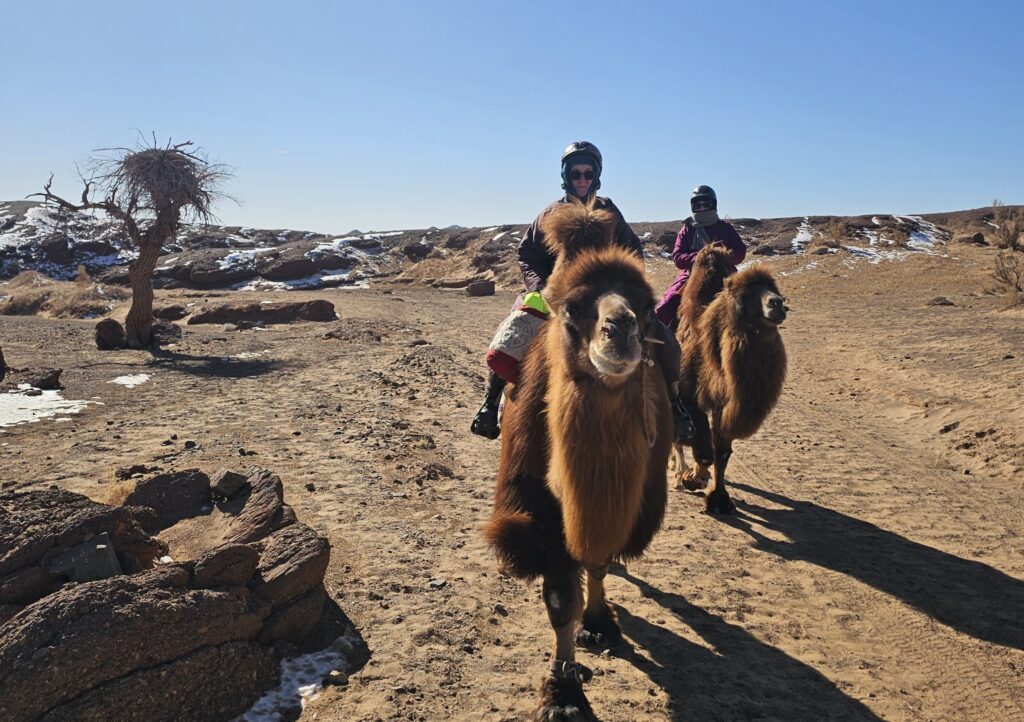 The center of the Autumn Gobi Camel Trek tour is a four day camel ride. Each day the camel trail leads through different scenery. From scenic gorges where the tracks of snow leopard can be spotted in the sand of a river bed shaped by desert flash floods, to the open expanses with sparse vegetation that is the pasture for the hardy camels, to sand dunes with Saxaul trees and to red canyon landscapes. Camp sites are at special locations that provide shelter but each also bears a special feature of ecology, prehistory, and geology that we explore from our tented camp. Each day we leave on camel back while the team finished breaking camp and moving it to the next location. One vehicle will meet the camel riders around mid-day to serve our lunch.
Slow Travel and Wildlife Sightings
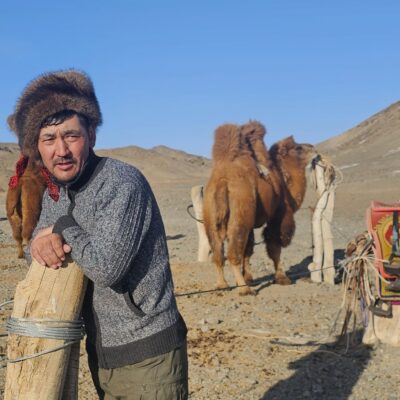
Moving along on camel back in this remote region of the Gobi desert is a privilege – an opportunity to travel slow and in the silence of the big desert, only hearing the wind, the steady, rhythmic movements of the camels’ feet on the desert ground, their occasional vocalizations. And perhaps the call of a bird in the sky or the sound of a flock of grouse taking to flight. Its a truly immersive journey, a meditative way to travel. IN an autumn Gobi camel trek, wildlife sightings vary, but there are fair chances of seeing fox, hare, ground squirrels, grouse, and Argali. Rarer would be wolf and of course snow leopard. And while our local camel guide knows and points out to us where wolf and snow leopard dens are located in the mountains, we would not endeavor to try seeing any of these animals if there was any risk of disturbing them. Its already a great experience to see tracks and signs of snow leopard that our guide points out. The Gobi’s bird life is rich and it is likely we see Cinereous and bearded vultures, steppe buzzard, Mongolian ground jays, Saxaul sparrows and more.
Cold Weather Camping – Cozy Gobi Nights
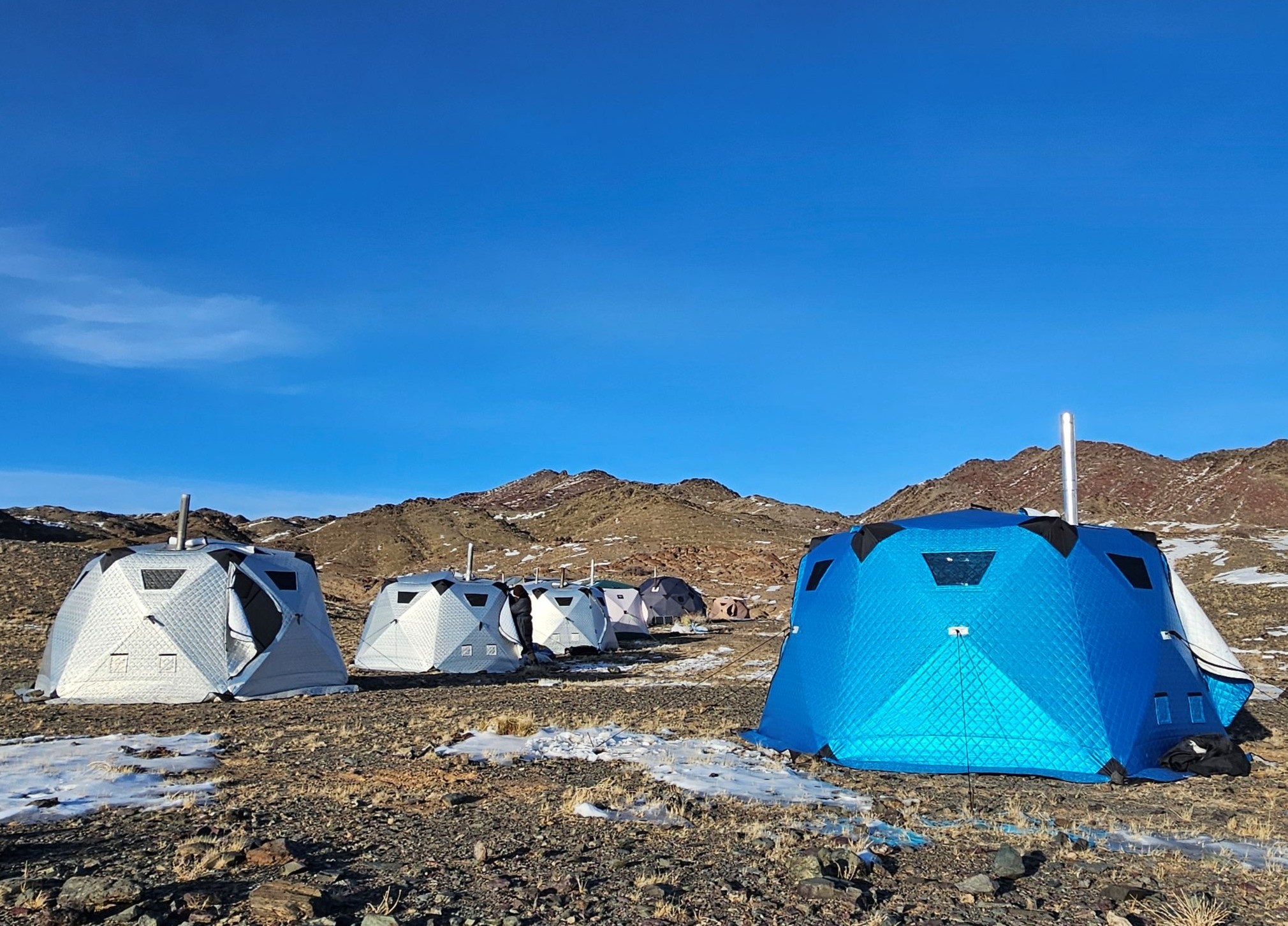
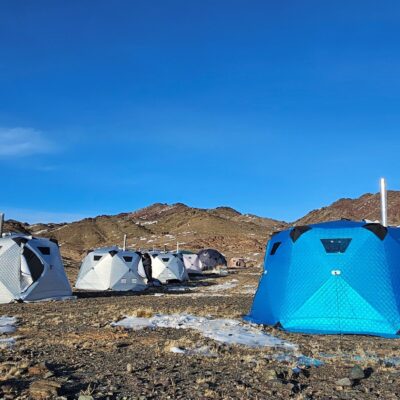
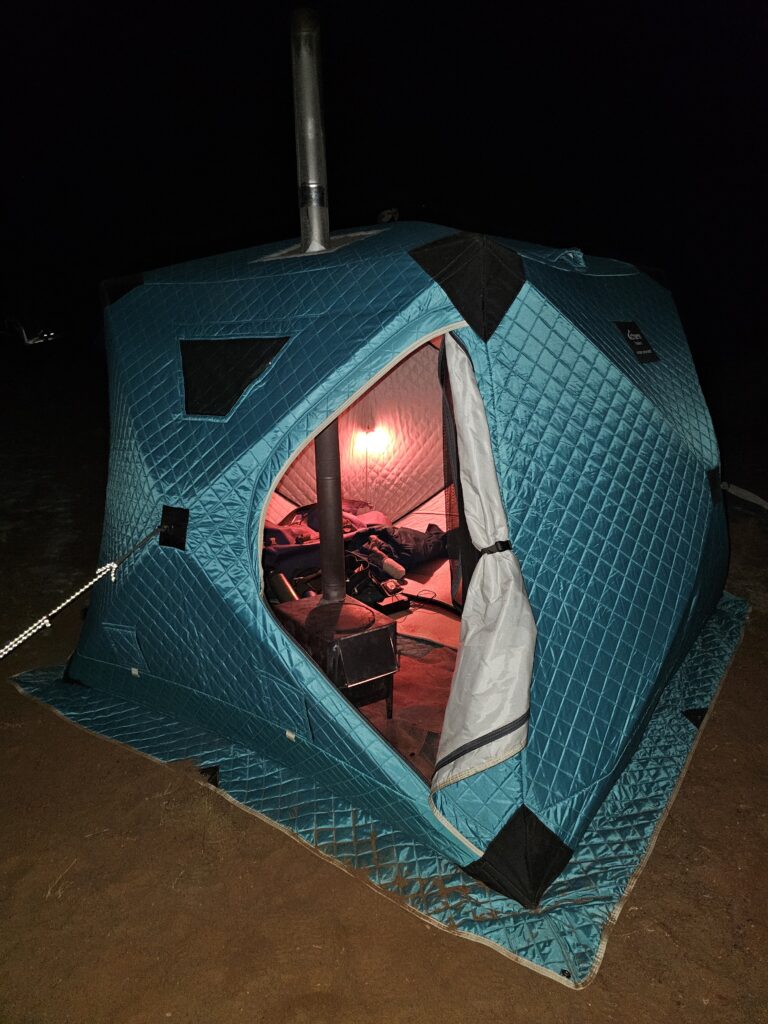 After all, the Gobi is the coldest desert on earth, and November marks the transition to winter. It is not only imperative to have the right outfit to stay warm on camel back, it is also crucial that we stay cozy in camp. To this end, our logistics carries all the essentials to create a warm and welcoming setup by the time the camel riders arrive in camp. Insulated tents for each guest, or for two people who wish to share a tent, are erected, and it is likely that smoke will rise from the chimney of the tent stoves already. A lager dome marks the group tent for mealtimes, drinks and conversations – it is heated, outfitted with tables and stools. Refreshments and drinks are ready here for the camel trekkers. The kitchen makes for the largest tent of the camp, with both a wood/coal stove for heating and a gas stove for cooking. Another larger dome tent serves the drivers and camel guides, for relaxing, playing cards most likely.., and sleeping,
Sleeping tents for autumn gobi camel treks will have a ground sheet, an insulated ground cover as well as several layers of sleeping mats. Two four-season sleeping bags and a soft inner bag provide warmth throughout the desert night. The tent stoves are fed before guests turn in and upon request once or twice during the night. Combined, the insulated tent, ground sheets, sleeping bags and a hot stove make for a comfortable night.
Autumn Gobi Camel Trek – Preparation
While the cold weather camping equipment will already by on the way to the staging area for the Autumn Gobi camel trek, the Stone Horse team will make sure our camel riding guests are getting properly dressed for their Gobi adventure. Our advance provided list of recommended clothing will list several warm layers including long underwear, top and bottom, wool or pile sweater or shirt, down or synthetic insulated jacket, warm pants, windproof pants, warm hat and gloves, neck gaiter. Sunglasses or googles are recommended to have handy if needed to protect against sun, wind and bright light if there is snow on the ground.
To complete the outfit described above, we provide a warm Mongolian winter deel for each guest – to wear during the Autumn Gobi camel trek, and to keep. The Mongolian deel is the traditional coat worn by men and women; with a warm lining, it is the ultimate garment for cooler season travel in the Mongolian countryside. We will ask for your height and weight to have your deel tailored in advance. Day one of the itinerary is spend in Ulaanbaatar city, fitting your deel and going to the market to supplement any warm clothing, and to get a warm pair of boots, NOTHING beats boots made in Mongolia for warmth; they are lined with felt or sheepskin and never feel damp, simply the best for cold weather. And sitting on a camel for long hours, you need WARM foot wear. Its a fun day to see the colorful market and complete your wardrobe for the Autumn Gobi Camel Trek.
Contact us| Dates | November 15 to 25, 2026, November 20 to 30, 2026 |
|---|
Itinerary
Day 1 – Arrival in Mongolia, Transfer from Chinggis Khaan International Airport to hotel in Ulaanbaatar City
Day 2 – In Ulaanbaatar city, shopping for warm clothing, city sightseeing as time allows, dinner with Stone Horse hosts
Day 3 – Travel to Dalanzadgad by 4 x 4, lunch enroute in Dundgobi
Day 4 – Travel to the staging area, “Stone Camels Camp”, visit Mukhar Shivert Gorge enroute, lunch in Bayndalai Soum
Day 5 to 8 – Camel Trekking (camp of insulated tents is moved by vehicles)
Day 9 – Travel to Dalanzadgad, visit Baynzag (Flaming Cliffs) on the way. Lunch in Bulgan Soum. Overnight in hotel in Dalanzadgad.
Day 10 – Travel to Ulaanbaatar
Day 11 – If time allows, city shopping, museum visits, transfer to airport, departure
Optional Day Tours from Ulaanbaatar City can be added to the Itinerary